In Defense of PUFAs
Polyunsaturated fatty acids have had a rough few years in wellness culture. "Seed oils" get lumped together and dismissed as inflammatory, unstable, or somehow unnatural — despite being some of the most thoroughly studied lipids in dermatology. Hemp seed, evening primrose, cucumber seed: these are PUFA-rich oils at the center of our formulas, not ingredients we're hiding from.
Here's the actual research behind why.
Built Into the Barrier Itself
Linoleic acid — an omega-6 PUFA — is the single most abundant polyunsaturated fatty acid present in the epidermis [1]. It isn't sitting there passively. It's selectively built into acylceramides, the specific lipid structures that form the skin's water barrier, and the amount of linoleic acid present directly correlates with how well that barrier holds [1][6]. This is a structural role, not a cosmetic one. Skin quite literally uses this fatty acid as a building material.
We Know Because of What Happens Without Them
In 1929, researchers George and Mildred Burr discovered essential fatty acids by accident — they were trying to prove fat wasn't a necessary dietary nutrient at all, and found the opposite. Animals raised on a fat-free diet developed scaly, inflamed skin, lost hair, and became dangerously dehydrated through their skin — a condition that could only be reversed with specific unsaturated fats [3][10].
Decades later, researchers took this further and asked whether the fix had to be dietary at all. In a 1976 study, cutaneous signs of essential fatty acid deficiency in humans were corrected simply by applying sunflower-seed oil — rich in linoleic acid — directly onto the skin [5]. A 1980 follow-up demonstrated linoleic acid's direct, structural role in restoring that barrier function [4]. The skin didn't just tolerate topical PUFAs. It needed them.
"Essential" isn't a marketing word here. It's the literal name dermatology gave these fats a century ago — because skin cannot make them itself.
Anti-Inflammatory, Not Just Structural
Beyond barrier repair, certain PUFAs feed directly into the body's own anti-inflammatory pathways. Gamma-linolenic acid (GLA) — found in evening primrose, borage, and hemp seed oil — converts efficiently into DGLA, a precursor to anti-inflammatory mediators that calm redness and support a healthier skin barrier [2][21]. Clinical trials on evening primrose oil have shown measurable improvements in hydration and barrier function in healthy volunteers, alongside more mixed results for specific inflammatory conditions [23]. A separate randomized controlled trial found that a linoleic acid–ceramide moisturizer meaningfully improved outcomes for psoriasis patients used alongside standard treatment [7].
The Real Concern — And Why We Formulate Around It
The skepticism toward PUFAs isn't baseless. Their chemistry — multiple double bonds — makes them genuinely more reactive to heat, light, and time than saturated fats. Processed carelessly, a PUFA-rich oil can oxidize and turn rancid, generating the very free radicals a good formula is supposed to guard against. That's not a myth. That's basic lipid chemistry, and it's exactly why linoleic and alpha-linolenic acid must be processed at low temperatures and protected with an antioxidant to stay stable.
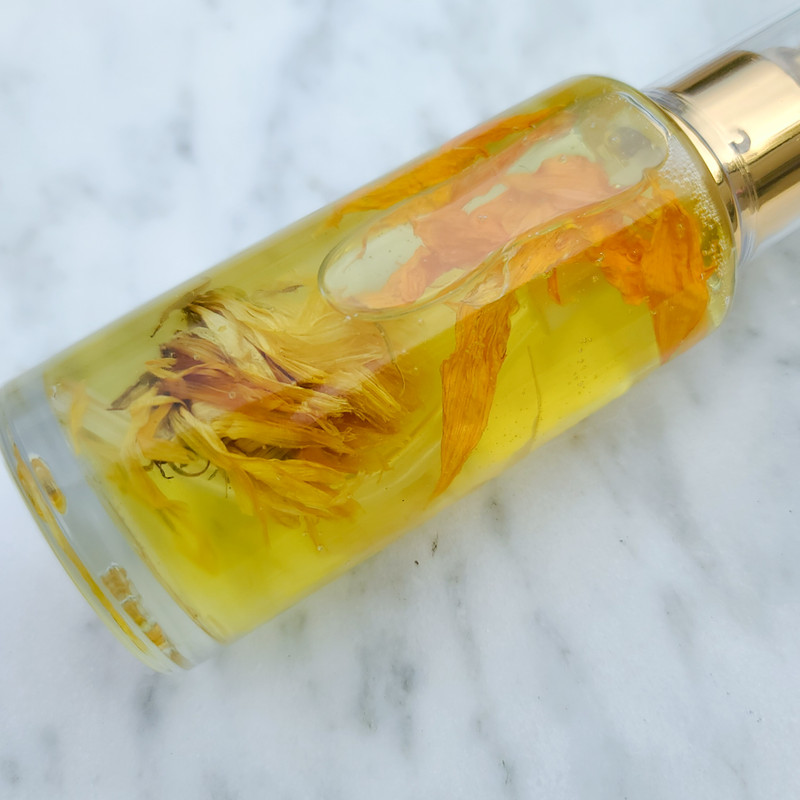
This is precisely why we never heat our infusions. Cold-forged, slow-infused, small-batch — it isn't a poetic choice. It's the only formulation method that keeps a PUFA-rich oil doing what the research says it should do, instead of degrading into something the skin has to defend against. Whole plants also arrive with their own built-in antioxidants — tocopherols chief among them — protecting the very fats we're relying on. It's one more reason we don't isolate a single fatty acid when we can infuse the whole plant instead.
A Note on the Research
In fairness to the skeptics: the evidence isn't uniform. Linoleic acid's structural role in the skin barrier is about as well-established as dermatology research gets, replicated across animal and human studies for over fifty years. The evidence for GLA-rich oils treating specific inflammatory skin conditions is more preliminary — some trials show real benefit, others show none, and reviewers have called for more rigorous studies before drawing firm conclusions [26]. We think that distinction matters, and we'd rather tell you where the science is solid versus where it's still developing than oversell either one.
This is the same principle behind Living Formulas and the WildBiome Ritual: work with what the skin's biology already needs, disclose exactly what you're doing and why, and let the research — not the trend cycle — decide what belongs in the bottle.
References
- Wu Y, et al. "The Role of Linoleic Acid in Skin and Hair Health: A Review." PMC, 2024. pmc.ncbi.nlm.nih.gov/articles/PMC11719646
- Balić A, Vlašić D, Žužul K, Marinović B, Mokos ZB. "Omega-3 Versus Omega-6 Polyunsaturated Fatty Acids in the Prevention and Treatment of Inflammatory Skin Diseases." International Journal of Molecular Sciences, 2020;21:741.
- Burr GO, Burr MM. "A New Deficiency Disease Produced by the Rigid Exclusion of Fat From the Diet." Journal of Biological Chemistry, 1929;82:345–367.
- Elias PM, Brown BE, Ziboh VA. "The Permeability Barrier in Essential Fatty Acid Deficiency: Evidence for a Direct Role for Linoleic Acid in Barrier Function." Journal of Investigative Dermatology, 1980;74:230–233.
- Prottey C, Hartop PJ, Black JG, McCormack JI. "The Repair of Impaired Epidermal Barrier Function in Rats by the Cutaneous Application of Linoleic Acid." British Journal of Dermatology, 1976;94:13–21.
- Linus Pauling Institute, Oregon State University. "Essential Fatty Acids and Skin Health." lpi.oregonstate.edu
- Liu Y, et al. "Topical Application of a Linoleic Acid–Ceramide Containing Moisturizer Exhibits Therapeutic and Preventive Benefits for Psoriasis Vulgaris: A Randomized Controlled Trial." Dermatologic Therapy, 2015. onlinelibrary.wiley.com
- Menton DN. "The Effects of Essential Fatty Acid Deficiency on the Skin of the Mouse." American Journal of Anatomy, 1968. onlinelibrary.wiley.com
- "The Effect of Oenothera biennis (Evening Primrose) Oil on Inflammatory Diseases: A Systematic Review of Clinical Trials." PMC, 2024. pmc.ncbi.nlm.nih.gov/articles/PMC10867995
- ConsumerLab.com. "Black Currant Oil, Borage Oil, Evening Primrose Oil, Flaxseed Oil, and Hemp Seed Oil Supplements & Top Picks." consumerlab.com
Editorial note: this article summarizes peer-reviewed dermatology and nutrition research for general education. It is not medical advice, and it isn't a substitute for guidance from a dermatologist or physician about your individual skin.